
Understanding Sound
Common Decibel Levels & Effects
NRC (Noise Reduction Coefficient) measures how well a material absorbs sound. Understanding decibel levels helps identify where acoustic treatment is needed most.
Threshold of hearing
Quiet library
Normal conversation
Heavy traffic / blender
Prolonged exposure causes hearing loss
Power tools, lawnmowers
Nightclubs, snowmobile
Concerts, jet take-off
Threshold of pain
Immediate pain
Pneumatic riveter
Jackhammers, gunshots
Immediate permanent damage
Noise & Education
Why Noise Is a Problem for Learning
Noise levels of 60–85 dB are considered loud and can induce stress, while noise above 70 dB can impede concentration and hinder younger children's speech development.
Reduced Communication
Children have a harder time distinguishing a teacher's voice in noisy environments, crucial for understanding instructions.
Difficulty Concentrating
High levels of background noise make it harder for children to focus on their lessons.
Impact on Linguistic Development
For children still learning to speak, unclear instructions due to noise can hinder language acquisition.
What To Do About It
Improve Classroom Acoustics
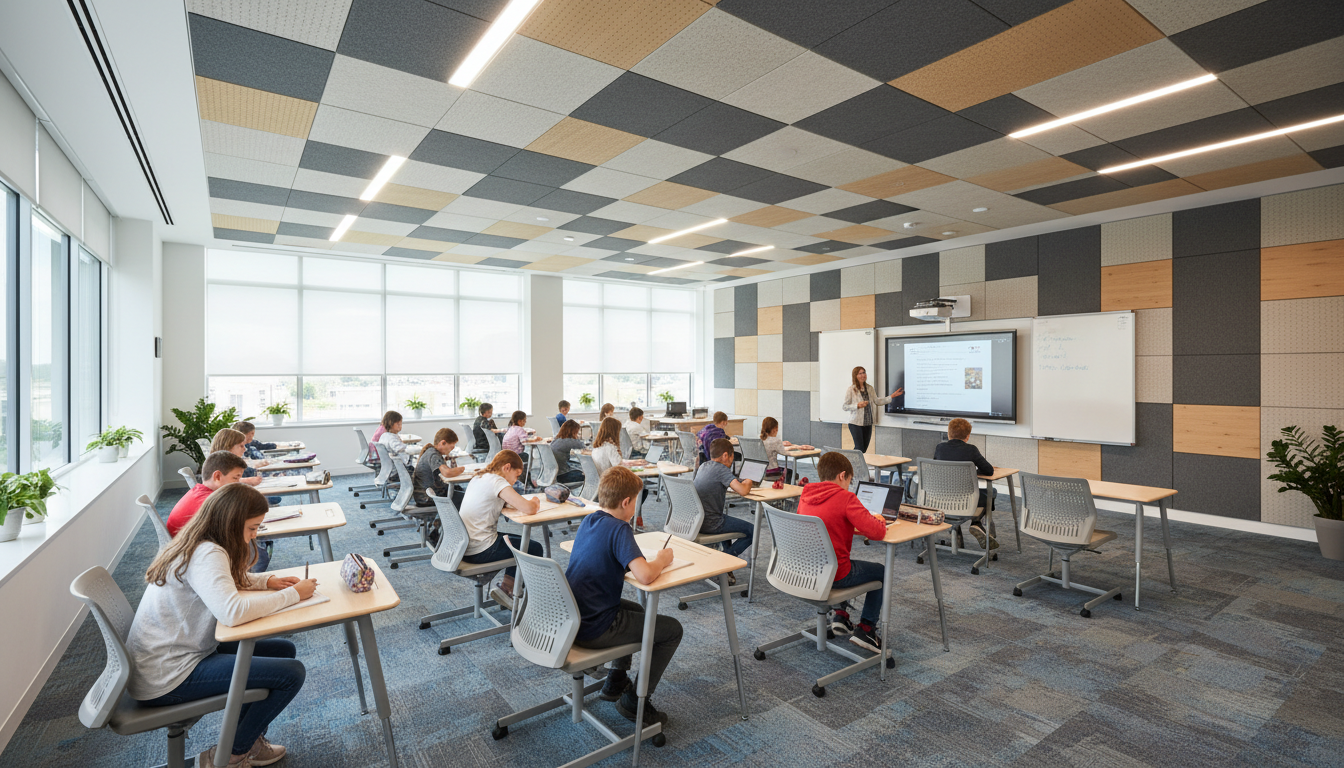
Install sound-absorbing materials like carpets and soft wall coverings.
Use Noise Meters
Measure noise levels to identify problems and track improvements in the acoustic environment.
Encourage Healthy Listening
Keep device volume below 60% and take breaks—high volumes can lead to hearing damage.
Why Acoustics Matter in Childcare
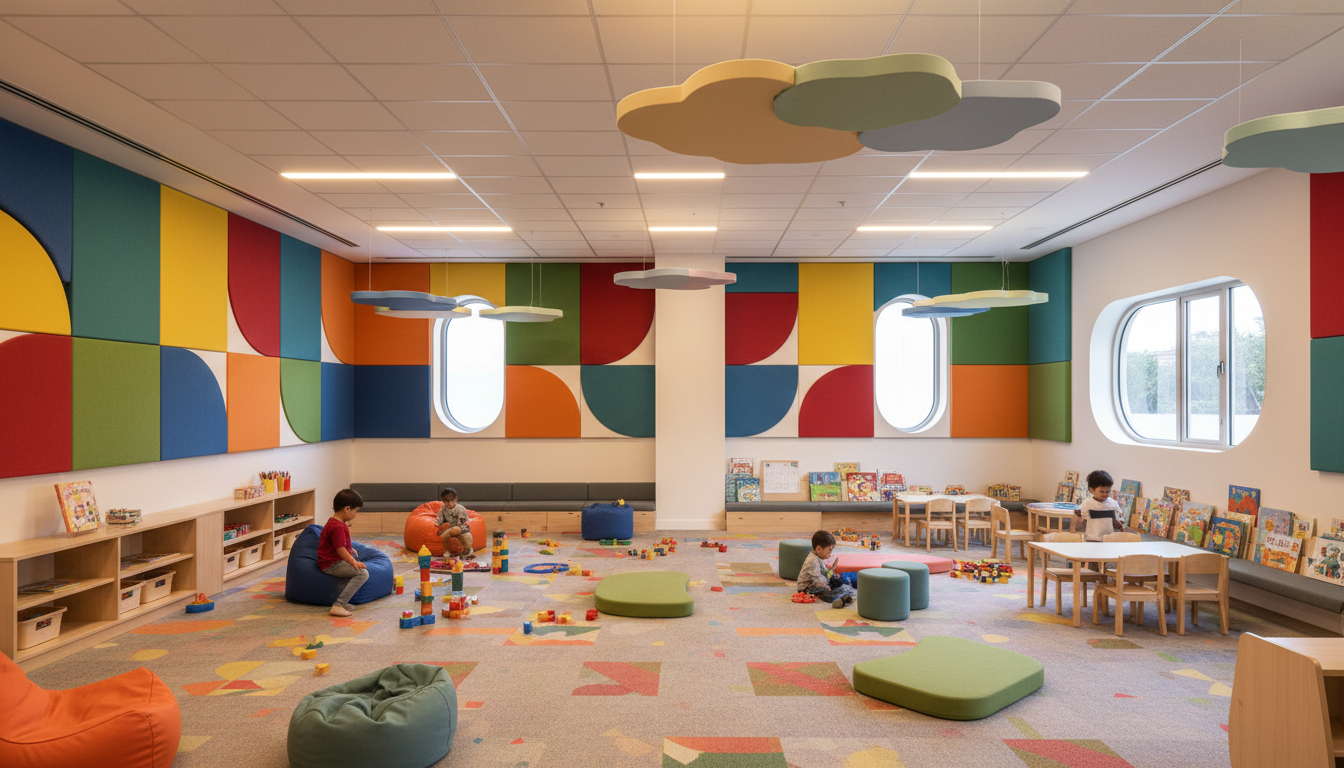
Sound-absorbing materials like panels, carpets, and soft furnishings control noise, reduce echo, and improve concentration — leading to a healthier and more stimulating learning environment for children and less vocal strain for staff.
Effective Acoustic Solutions
Sound-absorbing wall and ceiling panels
Soft furnishings: carpets, curtains, cushions
Strategic furniture layout for sound distribution
Sound-absorbing floor coverings
Acoustic ceiling tiles for high-ceiling rooms
Finishes: Aluminium trim available on all panel systems
Better Child Development
Good acoustics help children process information more effectively, contributing to better language development and overall learning.
Improved Concentration
Reducing background noise and echo allows for better focus and concentration in learning activities.
Healthier Environment
A quieter space reduces stress and fatigue for both children and educators.
Enhanced Safety
Clearer speech ensures important instructions and safety warnings are heard and understood.
Benefits for Staff
Reduced Vocal Strain
Lowering ambient noise prevents teachers from having to shout.
Less Stress & Fatigue
A quieter environment contributes to a less stressful day for staff.
Lower Absenteeism
A healthier work environment leads to fewer staff absences.